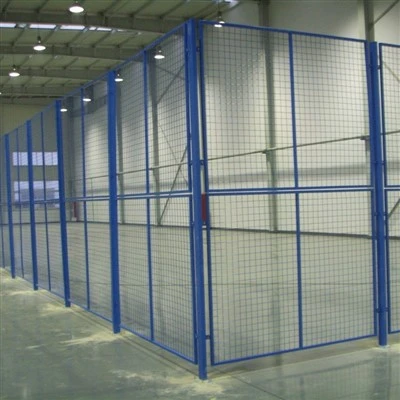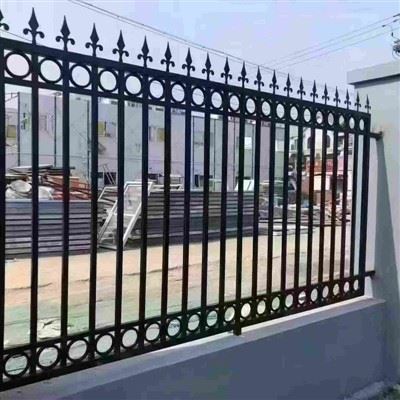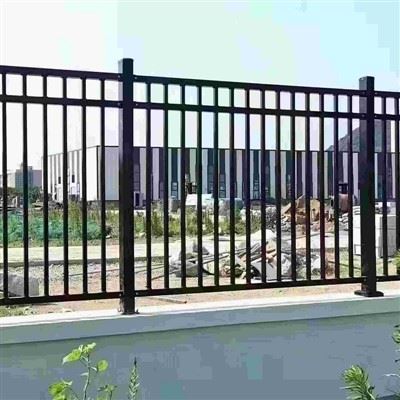

Rigid V-Bend Fence is a welded steel mesh panel with horizontal V-shaped bends formed across the panel. The welded grid fixes the mesh opening, while the formed profile increases panel depth and panel rigidity.
It is used for industrial, logistics, commercial, infrastructure and controlled-access perimeter fencing. Panel height, width, wire diameter, mesh opening, V-bend depth, post section and surface treatment can be specified to suit the fence layout and installation method.
Panel Construction
Welded Wire Grid
Vertical and horizontal wires are welded at each intersection to maintain the specified mesh opening and panel dimensions.
V-Bend Formation
Horizontal V-shaped bends are formed at defined positions across the panel. The formed section increases panel depth without changing the basic welded mesh construction.
Mounting Interface
Panel width and edge configuration are coordinated with post spacing and fixing hardware to maintain a consistent fence line during installation.
Material Options
Low Carbon Steel
Used for standard welded mesh panels where wire diameter, mesh opening and surface treatment are defined by the project specification.
Galvanized Steel
Galvanized wire or finished panels provide a zinc-coated surface for outdoor fence applications requiring corrosion protection.
Galvanized and Powder Coated
Powder coating can be applied over galvanized steel when a specified colour and additional surface protection are required.
Standard Specifications
|
Parameter |
Typical Specification |
|
Wire Diameter |
4.0–6.0 mm |
|
Mesh Opening |
50 × 100 mm / 50 × 200 mm / 75 × 200 mm |
|
Panel Width |
2000–3000 mm |
|
Panel Height |
1000–3000 mm |
|
V-Bend Depth |
100–300 mm |
|
V-Bend Quantity |
2–5 per panel |
|
Post Section |
50 × 50 mm–80 × 80 mm |
|
Surface Treatment |
Galvanized / Powder Coated |
V-Bend Configuration
Bend Depth
A 100–300 mm depth range covers common panel configurations. The selected depth should correspond with panel height, wire diameter and post arrangement.
Bend Position
The position of each bend affects the finished panel profile. Bend locations can be specified according to panel height and the required fence layout.
Panel Width
A 2000–3000 mm width range can be coordinated with post spacing to reduce cutting and maintain a consistent installation sequence.
Surface Treatment
Galvanized Surface
Galvanized steel provides a zinc-coated surface for outdoor exposure. Coating requirements should be defined according to the intended installation environment.
Powder Coating
Powder coating provides a specified finished surface over the treated steel. Colour and coating requirements can be stated in the project specification.
Application Areas
Industrial Perimeters
Used around factories, production areas, utility compounds and controlled operational zones.
Logistics Areas
Suitable for warehouses, distribution yards, loading areas and vehicle-access boundaries.
Commercial and Public Sites
Applied to commercial properties, infrastructure facilities, public compounds and controlled-access sites.
Selection Guide
Mesh Opening
Smaller openings provide tighter mesh spacing where restricted passage through the panel is required. Larger openings can be selected where greater visual openness is preferred.
Wire Diameter
Wire diameter should be assessed together with panel height, mesh opening and V-bend depth to establish the required panel construction.
Panel Dimensions
Panel width and height should be matched with post spacing and site measurements before production.
Surface Treatment
Galvanized or galvanized-plus-powder-coated finishes can be selected according to exposure conditions and the required finished appearance.
Manufacturing and Quality Checks
Wire Control
Wire diameter and surface condition are checked before mesh production to keep the panel construction within the specified range.
Welding Control
Welded intersections are checked for mesh opening, panel dimensions and consistent joint formation.
Forming Control
V-bend depth, bend position and finished panel width are checked after forming.
Final Inspection
Finished panels are inspected for dimensions, surface condition and coating appearance before packing.
Packing and Shipment
Bundle Arrangement
Panels are stacked in aligned bundles according to panel dimensions to simplify handling and loading.
Component Matching
Panel, post and fixing quantities can be organized according to the specified fence length and panel width.
Loading Dimensions
Bundle size and loading arrangement are determined from panel dimensions and shipment quantity to support efficient transport and unloading.
Project Specification
For quotation and production confirmation, provide panel height, panel width, wire diameter, mesh opening, V-bend depth, bend quantity, post section, surface treatment and required quantity.
Installation drawings, fence elevations or dimensional schedules can be supplied when the panels must match a defined perimeter layout. These details allow panel dimensions, post spacing and fixing positions to be checked before production.
FAQ
Q: What wire diameters are available?
A: Common configurations use 4.0–6.0 mm wire. The required diameter should be selected with the panel height, mesh opening and V-bend configuration.
Q: What mesh openings are available?
A: Typical configurations include 50 × 100 mm, 50 × 200 mm and 75 × 200 mm. Other mesh dimensions can be specified according to the required panel construction.
Q: What is the typical V-bend depth?
A: Typical V-bend depth is 100–300 mm. The selected depth depends on panel height, wire diameter and the required panel profile.
Q: Can panel dimensions be customized?
A: Yes. Panel height, width, wire diameter, mesh opening, V-bend depth, bend position and post section can be specified for the required fence layout.
Q: Which surface treatments can be specified?
A: Galvanized and galvanized-plus-powder-coated configurations are available for projects requiring a defined surface treatment.
Q: What information is required for quotation?
A: Panel dimensions, mesh opening, wire diameter, V-bend configuration, surface treatment, quantity, post requirements and available installation drawings provide the main specification information.
Hot Tags: rigid v-bend fence, China rigid v-bend fence manufacturers, suppliers, factory, 4 foot high temporary fencing, detention fence mesh, estate wire mesh fencing, portable barriers fencing, powder coated chain wire fencing, tennis court wire fencing