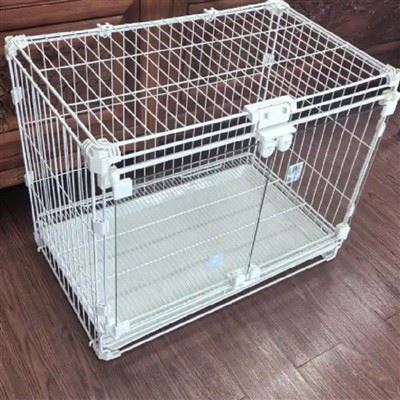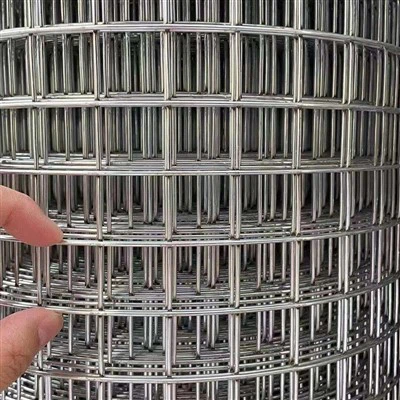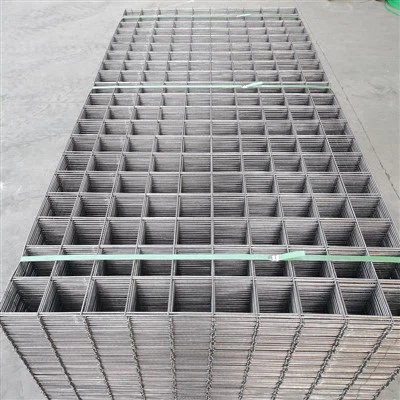

Heavy-Duty V-Bend Fence is a welded steel mesh panel formed with horizontal V-shaped bends across the panel. The welded grid fixes the mesh opening, while the formed profile adds depth to the panel section and increases its structural rigidity.
It is used for industrial, logistics, infrastructure, commercial and controlled-access perimeter projects. Panel height, width, wire diameter, mesh opening, V-bend depth, post section and surface treatment can be specified to match the fence layout and installation requirements.
Panel Construction
Welded Mesh
Steel wires are welded at each intersection to form a fixed rectangular mesh. Weld spacing and panel dimensions determine the finished opening pattern.
V-Bend Formation
Horizontal V-shaped bends are formed at specified positions across the panel. The formed section increases panel depth without changing the basic welded mesh construction.
Edge Configuration
Panel edges are prepared for connection with the selected posts and fixing components. Edge dimensions are coordinated with panel width and the installation system.
Heavy-Duty Configuration
Wire Diameter
Typical configurations use 4.0–6.0 mm steel wire. Wire diameter is selected together with panel height, width and mesh opening rather than as an isolated specification.
V-Bend Depth
Typical bend depth is 150–300 mm. The selected depth determines the formed profile of the panel and should correspond with the overall fence configuration.
Mesh Opening
Common openings include 50 × 200 mm and 75 × 200 mm. The opening size affects mesh density and should be considered together with wire diameter.
Key Product Advantages
Increased Panel Depth
The V-bend changes the panel from a flat mesh plane into a formed section, increasing its resistance to deformation under normal handling and installation conditions.
Fixed Mesh Geometry
Welded intersections maintain the specified aperture pattern, helping panels align consistently along the fence line.
Coordinated Fence System
Panel dimensions, post sections and fixing components can be specified together to maintain dimensional compatibility during installation.
Technical Specifications
|
Parameter |
Typical Specification |
|
Material |
Low-carbon steel wire |
|
Wire Diameter |
4.0–6.0 mm |
|
Mesh Opening |
50 × 200 mm / 75 × 200 mm |
|
Panel Height |
1,800–2,400 mm |
|
Panel Width |
2,000–3,000 mm |
|
V-Bend Depth |
150–300 mm |
|
Post Section |
60 × 60 mm / 80 × 80 mm |
|
Post Spacing |
2,000–3,000 mm |
|
Surface Treatment |
Hot-dip galvanized / galvanized + PVC coated |
|
Connection |
Clamp fixing / bolt fixing |
Surface Treatment
Hot-Dip Galvanized
A zinc coating is applied to the steel surface to provide corrosion protection for outdoor fence installations.
Galvanized + PVC Coated
A PVC coating can be applied over galvanized steel when an additional protective layer and specified finished color are required.
Coating Inspection
Finished surfaces can be checked for coating continuity, visible defects and conformity with the specified surface treatment before shipment.
Application Areas
Industrial Sites
Used around manufacturing compounds, operating areas, storage yards and controlled-access facilities.
Logistics Facilities
Suitable for warehouses, distribution yards, loading areas and material storage compounds.
Infrastructure
Applicable to transport facilities, utility sites, public infrastructure and large perimeter projects.
Commercial Areas
Used around commercial compounds, service facilities and other outdoor sites requiring a rigid welded mesh boundary.
Selection Guide
Wire Diameter
Select 4.0–6.0 mm wire according to panel dimensions and required panel rigidity. Larger wire diameter increases the steel section used in each welded panel.
Mesh Opening
Choose between common 50 × 200 mm and 75 × 200 mm patterns according to the required mesh density and visual openness.
V-Bend Depth
Select a 150–300 mm bend depth according to the required formed profile and panel configuration.
Post Section
Use a 60 × 60 mm or 80 × 80 mm post section according to panel dimensions, post spacing and fixing arrangement.
Manufacturing and Quality Control
Wire Preparation
Steel wire is prepared to the specified diameter before mesh forming and welding.
Welding Control
Welded intersections are checked for position, continuity and panel geometry during production.
V-Bend Accuracy
Forming dimensions are checked against the specified bend depth and panel profile to maintain repeatable geometry.
Final Inspection
Finished panels are checked for panel height, width, mesh opening, wire diameter, bend dimensions, surface condition and connection areas.
Project Configuration
A project specification normally includes panel height, panel width, wire diameter, mesh opening, V-bend depth, post section, post spacing, connection method and surface treatment.
The fence length and panel width determine the required panel quantity. Post quantity is then coordinated with the selected panel width and installation arrangement.
For drawing-based projects, panel dimensions and connection details can be reviewed against the required fence layout before production.
Packaging and Delivery
Panel Stacking
Panels are stacked by specification and secured for handling and transportation.
Component Identification
Panels, posts and fixing components can be separated and identified according to their respective dimensions and specifications.
Loading Arrangement
Packing quantities are planned according to panel size and shipment volume to support organized unloading and installation.
FAQ
Q: What wire diameter is used for Heavy-Duty V-Bend Fence?
A: Typical configurations use 4.0–6.0 mm steel wire. The final diameter is selected according to panel dimensions, mesh opening and required rigidity.
Q: What mesh openings are available?
A: Common options are 50 × 200 mm and 75 × 200 mm. Other mesh dimensions can be specified for project requirements.
Q: What V-bend depth is available?
A: Typical V-bend depth is 150–300 mm. The selected dimension depends on panel height and the required formed profile.
Q: Which post sections can be used?
A: Common post sections are 60 × 60 mm and 80 × 80 mm. The final section is coordinated with panel dimensions, spacing and fixing components.
Q: What information is needed for a quotation?
A: The required information normally includes panel height, panel width, wire diameter, mesh opening, V-bend depth, post section, post spacing, surface treatment, connection method and required quantity.
Hot Tags: heavy-duty v-bend fence, China heavy-duty v-bend fence manufacturers, suppliers, factory, Bordered Wire Mesh Fence, chain link fencing system, clamp fixed mesh fence system, low visual obstruction fence mesh, portable crowd control fence panels, tunnel entrance mesh fence