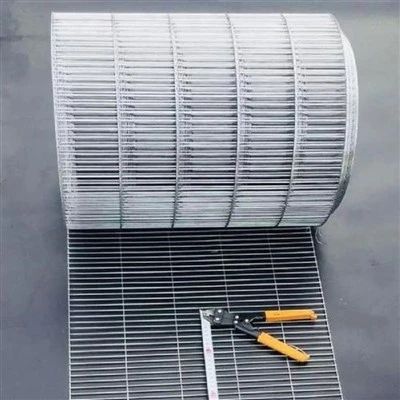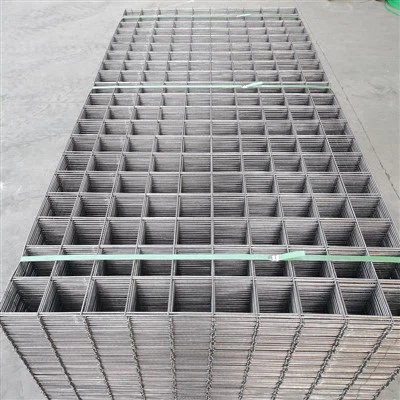

V-Bend Boundary Fence is a welded steel mesh panel with horizontal V-shaped bends formed across the panel. The welded grid fixes the mesh opening, while the formed profile adds depth to the panel section and supports a rigid boundary structure.
It is used for industrial, commercial, logistics, public and infrastructure boundaries. Panel height, width, wire diameter, mesh opening, V-bend arrangement, post section and surface treatment can be specified according to the fence layout and installation requirements.
Panel Structure
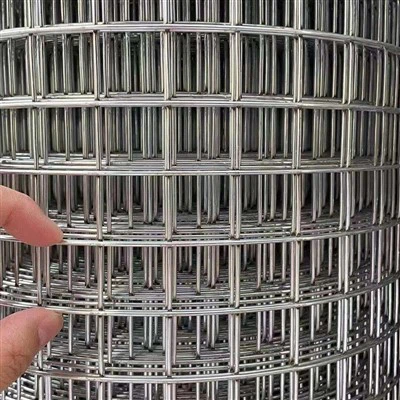
Welded Mesh Grid
Vertical and horizontal steel wires are welded at each intersection to maintain the specified mesh opening throughout the panel.
V-Bend Profile
Horizontal V-shaped bends are formed across the panel at defined positions. The formed section increases panel depth while retaining an open mesh construction.
Panel Edges
The panel edges are prepared to match the selected post and fixing arrangement, supporting consistent alignment between adjacent panels.
Typical Specifications
|
Parameter |
Typical Specification |
|
Wire Diameter |
4.0–6.0 mm |
|
Mesh Opening |
50 × 200 mm / 75 × 200 mm |
|
Panel Height |
1.2–2.4 m |
|
Panel Width |
2.0–2.5 m |
|
V-Bend Quantity |
2–4 per panel |
|
V-Bend Depth |
100–300 mm |
|
Material |
Low-carbon steel |
|
Surface Treatment |
Hot-dip galvanized / PVC coated |
|
Post Section |
Square / rectangular steel |
|
Connection |
Clips / bolts / fixing brackets |
V-Bend Configuration
Bend Position
Bend positions are arranged across the panel height according to the selected configuration. Consistent positioning keeps adjoining panels aligned along the fence line.
Bend Depth
V-bend depth affects the formed panel profile. The required depth should be specified together with panel height and wire diameter.
Bend Quantity
The number of bends depends on panel height and the required panel configuration. The same arrangement can be maintained across an order for consistent installation.
Wire and Mesh Selection
Wire Diameter
4.0–6.0 mm wire covers common panel configurations. The selected diameter should correspond with panel dimensions and the required structural specification.
Mesh Opening
50 × 200 mm provides a tighter grid pattern, while 75 × 200 mm provides a more open mesh arrangement.
Panel Size
Panel height and width should be coordinated with post spacing, foundation locations and the planned fence line before production.
Surface Treatment
Hot-Dip Galvanizing
A zinc coating forms a protective layer on the steel surface and is commonly specified for outdoor fencing.
PVC Coating
PVC coating adds a polymer layer over the steel surface and provides an alternative finish for projects requiring a specified color or surface protection.
Coating Control
The coating type and required specification should be confirmed before production. Surface condition is checked after treatment before packing.
Post and Fixing System
Post Section
Square or rectangular steel posts can be matched with the panel dimensions and fence height. Post section and wall thickness should be confirmed for the selected configuration.
Fixing Method
Clips, bolts or fixing brackets can be used according to the panel edge and post configuration.
Post Spacing
Post spacing should be calculated from the actual panel width and fixing position so that the panels fit the planned fence layout.
Application Areas
Industrial Boundaries
Used around factories, workshops, storage yards, utility areas and controlled-access compounds.
Logistics Sites
Suitable for warehouses, distribution yards, loading areas and storage compounds.
Commercial Properties
Applied to commercial premises, service facilities and property boundaries requiring rigid welded mesh panels.
Infrastructure
Suitable for project compounds, utility facilities, transportation areas and fixed perimeter sections.
Manufacturing Control
Wire Inspection
Steel wire is checked against the specified diameter before mesh production.
Mesh Welding
Weld positions and mesh openings are inspected to maintain consistent panel geometry.
V-Bend Forming
Panel dimensions, bend positions and formed profiles are checked after the bending process.
Final Inspection
Finished panels are checked for height, width, mesh opening and overall geometry before surface treatment and packing.
Project Specification
Panel Details
Provide panel height, width, wire diameter, mesh opening and V-bend arrangement.
Post Details
Specify post section, post length and planned spacing when panels and posts are required as one system.
Surface Finish
State the required surface treatment and coating specification before production.
Quantity
Panel quantity, post quantity and fixing requirements should be confirmed together for production planning and project calculation.
Purchasing Considerations
Dimensional Matching
Panel width, post spacing and fixing positions should be confirmed together before production.
Consistent Geometry
Mesh opening, bend position and panel dimensions should remain consistent throughout the same order.
System Compatibility
Panel edges, posts and fixing hardware should use compatible dimensions to simplify installation and maintain the fence line.
Packing
Panels should be secured according to their dimensions and handling requirements to protect the formed geometry during transport.
FAQ
Q: What is a V-Bend Boundary Fence?
A: It is a welded steel mesh boundary panel with horizontal V-shaped bends formed across the panel to create additional panel depth.
Q: What wire diameters are commonly used?
A: Typical configurations use 4.0–6.0 mm steel wire. The selected diameter depends on the required panel specification.
Q: Which mesh openings are available?
A: 50 × 200 mm and 75 × 200 mm are common configurations. Other mesh openings can be confirmed according to project requirements.
Q: Can the panel dimensions be customized?
A: Yes. Panel height, width, wire diameter, mesh opening and V-bend arrangement can be specified according to the fence layout.
Q: Which surface treatments are available?
A: Hot-dip galvanizing and PVC coating are common options. The required treatment should be confirmed before production.
Q: What information is required for a quotation?
A: Provide panel height, width, wire diameter, mesh opening, V-bend arrangement, surface treatment, post section and required quantity.
Hot Tags: v-bend boundary fence, China v-bend boundary fence manufacturers, suppliers, factory, 358 Security Fence, coated wire fence mesh, Industrial Partition fence, outdoor basketball court fencing, powder coated chain wire fencing, restricted area mesh fence