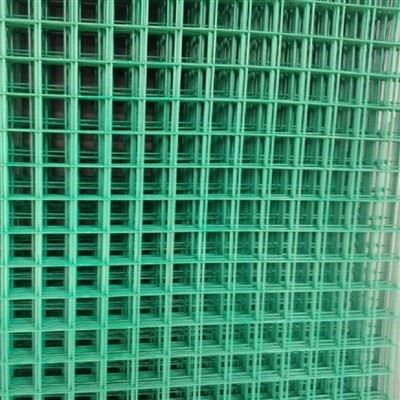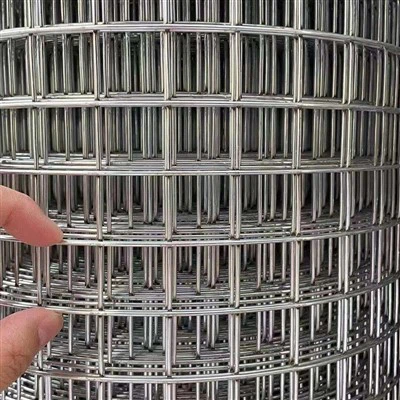

Welded Gabion Boxes are rigid stone-filled wire containers manufactured from welded steel mesh panels. The panels form the base, side walls, end panels, and internal diaphragms required to create stable individual compartments.
The welded construction provides consistent mesh geometry and a defined panel structure for retaining walls, slope stabilization, erosion control, drainage works, and landscape structures. Units are supplied as flat-packed panels with the required connection components for assembly at the installation site.
Product dimensions, wire diameter, mesh opening, coating system, diaphragm arrangement, and connection method can be selected according to project requirements and installation conditions.
Product Structure
Welded Mesh Panels
Steel wires are resistance-welded at each intersection to form a rigid square or rectangular mesh. The welded joints maintain the panel geometry during assembly and stone filling.
Internal Diaphragms
Vertical diaphragms divide longer gabion units into separate compartments. This helps control stone distribution and limits excessive movement of fill material within the box.
Connection Components
Panel edges can be assembled using spiral binders, clips, or lacing wire. The connection method is selected according to the panel configuration, project requirements, and installation method.
Material Options
Steel Wire
Low-carbon or higher-strength steel wire can be selected according to the required mechanical properties, wire diameter, and application conditions.
Galvanized Wire
A zinc coating provides protection against atmospheric moisture and corrosion. Coating requirements can be specified according to the applicable project standard and inspection criteria.
Polymer-Coated Wire
A polymer coating can be applied over a metallic-coated wire to provide an additional protective layer for applications requiring enhanced resistance to weathering, moisture, or aggressive exposure conditions.
Key Advantages
Consistent Mesh Geometry
Welded intersections maintain uniform mesh openings and provide stable panel dimensions during handling, assembly, and filling.
Controlled Panel Configuration
Panel length, width, height, mesh opening, wire diameter, and diaphragm positions can be coordinated with the project layout and installation requirements.
Efficient Flat-Packed Supply
Disassembled panels can be stacked into compact bundles for storage and transportation. Connection components can be packed separately according to the corresponding box configuration.
Defined Assembly Structure
Preformed panels and prepared connection components provide a controlled assembly arrangement, reducing the need for extensive on-site fabrication.
Technical Specifications
|
Parameter |
Typical Specification |
|
Wire Diameter |
3.0–6.0 mm |
|
Mesh Opening |
50 × 50, 75 × 75, 100 × 50, 100 × 100 mm |
|
Box Length |
1.0–4.0 m |
|
Box Width |
0.5–1.0 m |
|
Box Height |
0.3–1.0 m |
|
Mesh Form |
Welded square or rectangular mesh |
|
Surface Treatment |
Galvanized or polymer coated |
|
Connection Method |
Spiral binder, clip, or lacing wire |
|
Internal Division |
Diaphragm |
|
Supply Form |
Flat panels in bundles |
Size Selection
Mesh Opening
Mesh opening should be selected according to the stone size and grading used for filling. The opening must be sufficiently smaller than the minimum intended fill size to limit stone loss through the mesh.
Wire Diameter
Typical wire diameters range from 3.0 mm to 6.0 mm. Selection depends on box dimensions, panel configuration, loading conditions, and project requirements.
Box Dimensions
Length, width, and height should be coordinated with the wall geometry, slope profile, foundation arrangement, available installation space, and required stone volume.
Longer units may require additional diaphragms to maintain controlled internal compartments.
Surface Treatment
Galvanized Finish
Galvanized wire provides a metallic protective coating for outdoor applications. The required coating mass and coating class should be specified according to the applicable project standard.
Polymer Coating
A polymer layer over the metallic coating provides an additional barrier against moisture, weathering, and other environmental exposure. The coating material and thickness should be confirmed according to project requirements.
Coating Inspection
Coating quality can be evaluated through defined coating weight or thickness requirements, visual inspection, adhesion criteria, and other tests specified by the applicable standard or purchase specification.
Application Areas
Retaining Walls
Stone-filled welded gabions can be arranged in courses to form gravity retaining structures where the design and foundation conditions are suitable.
Slope Protection
Gabion structures can be used to protect exposed slopes and embankments against surface erosion and localized soil movement.
Water and Drainage Works
Welded gabion units can be incorporated into channel protection, drainage structures, riverbank works, and other areas where stone-filled structures are required.
Landscape Structures
The modular construction is suitable for boundary walls, raised planters, architectural features, and other landscape applications requiring a visible stone-filled structure.
Manufacturing & Inspection
Wire Preparation
Incoming wire is checked for diameter, surface condition, and specified mechanical properties before mesh production.
Panel Welding
Longitudinal and transverse wires are positioned according to the specified mesh pattern and joined at the required intersections by resistance welding.
Dimensional Inspection
Finished panels are checked for overall dimensions, mesh opening, squareness, panel configuration, and diaphragm positioning.
Weld and Component Control
Welded joints and panel connections are inspected according to the applicable quality requirements. Diaphragms, binders, clips, lacing wire, and other accessories are checked against the approved configuration and packing list.
Packing & Shipment
Flat Panel Bundles
Finished panels are stacked and strapped into compact bundles to simplify handling, storage, and transportation.
Component Identification
Connection components and diaphragms are separated and identified according to box dimensions and packing requirements.
Surface Protection
Suitable spacers or protective packing materials can be used between panels where required to reduce surface contact and minimize coating damage during transportation.
Shipment Preparation
Bundle quantity, packing method, labeling, and loading arrangement are coordinated with the order configuration and shipment requirements.
Project Specification Checklist
Before finalizing an order, confirm the following technical information:
Box length, width, and height
Wire diameter and specified mechanical properties
Mesh opening and mesh configuration
Wire material and surface treatment
Coating type and applicable coating requirements
Diaphragm quantity and internal positions
Connection method and accessory requirements
Stone size and grading, where relevant to mesh selection
Required quantity and packing arrangement
Project drawings or dimensional specifications
Delivery schedule and shipment requirements
Providing these details at the inquiry stage helps align the manufactured configuration with the intended installation conditions.
FAQ
Q: What wire diameter is commonly used for welded gabion boxes?
A: Typical wire diameters range from 3.0 mm to 6.0 mm. Common selections include 3.0 mm, 4.0 mm, and 5.0 mm, depending on box dimensions, loading conditions, and project requirements.
Q: What mesh openings are available?
A: Common configurations include 50 × 50 mm, 75 × 75 mm, 100 × 50 mm, and 100 × 100 mm. The appropriate opening should be selected according to the stone size and project requirements.
Q: What box sizes are commonly supplied?
A: Common configurations include 1 × 1 × 0.5 m, 1 × 1 × 1 m, 2 × 1 × 1 m, and 3 × 1 × 1 m. Custom dimensions can be considered according to approved project specifications.
Q: Are welded gabion boxes supplied assembled?
A: Welded gabion boxes are commonly supplied as flat panels with the required diaphragms and connection components. The panels are assembled and filled at the installation site.
Q: What information is required for an inquiry?
A: Provide the required box dimensions, wire diameter, mesh opening, material and coating requirements, diaphragm arrangement, connection method, quantity, and project drawings where available. These details allow the required configuration to be reviewed before production.
Hot Tags: welded gabion boxes, China welded gabion boxes manufacturers, suppliers, factory, 1 2 pvc coated welded wire mesh, architectural woven wire mesh, mesh panel enclosure, ss chicken wire mesh, steel mesh panel fabrication, wire mesh for road construction