
BRC Welded Mesh Fence is a welded steel panel fence with rolled top and bottom edges. The welded mesh provides a fixed panel grid, while the rolled edges form a continuous rounded profile and add rigidity to the panel structure.
It is used for perimeter fencing where defined boundaries, open visibility and a consistent finished profile are required. Panel height, width, wire diameter, mesh opening, post section and surface treatment can be specified according to the fence layout and installation conditions.
Roll Top Panel Structure
Welded Mesh Panel
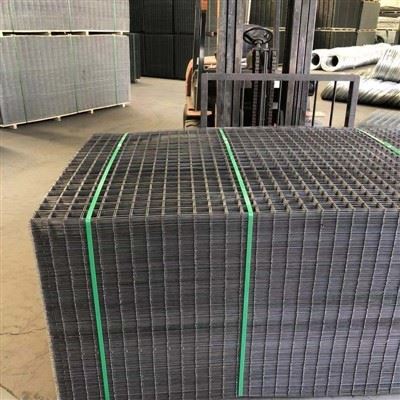
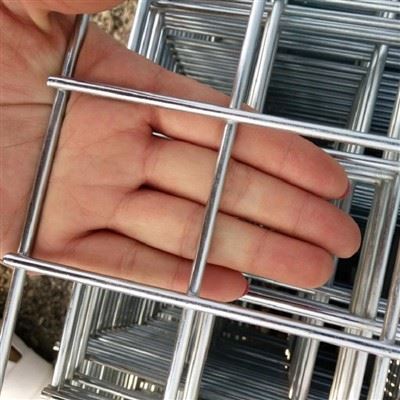
Vertical and horizontal steel wires are welded at each intersection to form the mesh grid. The welding pattern fixes the opening dimensions and maintains the panel geometry during handling.
Rolled Edges
The upper and lower wire sections are formed into continuous roll-top profiles. This creates a rounded edge and changes the panel section from a flat mesh sheet to a more rigid formed structure.
Panel Connection
Panels are attached to steel posts with clamps, brackets or bolted fittings. The fixing position should correspond with the panel height and post section to maintain consistent alignment along the fence line.
Standard Specifications
|
Item |
Typical Specification |
|
Wire Diameter |
4.0 / 4.5 / 5.0 / 6.0 mm |
|
Mesh Opening |
50 × 150 / 50 × 200 mm |
|
Panel Height |
900 / 1200 / 1500 / 1800 / 2100 / 2400 mm |
|
Panel Width |
2200 / 2400 / 3000 mm |
|
Edge Profile |
Rolled Top and Bottom |
|
Round Post |
Ø48 / Ø60 mm |
|
Square Post |
50 × 50 / 60 × 60 mm |
|
Post Thickness |
1.5 / 2.0 / 2.5 mm |
|
Surface Treatment |
Galvanized / Powder Coated |
|
Fixing |
Clamp / Bracket / Bolt and Nut |
Material and Surface Treatment
Steel Wire
Low-carbon steel wire is used for welded panels. Wire diameter is selected according to panel height, mesh opening and the required panel construction.
Galvanized Surface
Galvanized steel provides a zinc layer between the steel substrate and the external environment. Coating requirements should be stated with the project specification when the fence will be installed outdoors.
Powder Coated Surface
Powder coating provides a controlled colored finish over the prepared metal surface. Color, coating system and surface preparation can be defined as part of the purchase specification.
Key Product Advantages
Fixed Panel Geometry
Welded intersections hold the vertical and horizontal wires in a defined grid, reducing movement between individual wires during handling and installation.
Rolled Edge Profile
The top and bottom rolls create a rounded finished edge and provide additional section depth to the panel.
Open Visibility
The open mesh allows visual access through the perimeter while maintaining a continuous physical boundary.
Matched Components
Panel dimensions, posts and fixing hardware can be specified together so that connection positions and component dimensions correspond before installation.
Specification Selection
Wire Diameter
4.0 mm is used for lighter panel configurations. 5.0 mm is a common specification for standard roll-top panels, while 6.0 mm can be selected for heavier panel construction.
Mesh Opening
50 × 150 mm provides a relatively dense welded grid for general perimeter applications. 50 × 200 mm provides a more open configuration where greater visibility is required.
Panel Height
900–1500 mm suits lower boundary requirements. 1800–2400 mm configurations are commonly selected for taller perimeter fencing.
Post Section
Ø48 mm, Ø60 mm and 50 × 50 mm or 60 × 60 mm square sections are commonly used. Post size and wall thickness should be matched with panel height and fixing arrangement.
Typical Applications
Industrial Sites
Used around factories, warehouses, service yards and equipment compounds where a defined perimeter and clear sightlines are required.
Commercial Properties
Suitable for commercial buildings, parking areas, managed properties and other sites requiring a fixed boundary with an open appearance.
Schools and Public Areas
The rolled profile provides a smooth finished edge for schools, parks, recreation areas and other public-facing locations.
Residential Developments
Used for community boundaries, shared property lines and residential perimeter fencing where appearance and visibility form part of the project specification.
Manufacturing and Quality Control
Wire Preparation
Steel wire is straightened and cut according to the specified panel dimensions before welding.
Mesh Welding
Vertical and horizontal wires are positioned according to the required opening and welded at the intersections. Mesh dimensions and wire diameter are checked against the production specification.
Roll Forming
The welded panel passes through the forming process for the specified top and bottom edge profile. Panel height, width and roll geometry are checked after forming.
Final Inspection
Inspection covers wire diameter, mesh opening, panel dimensions, weld condition, edge profile and surface finish. Post dimensions and fixing locations can be checked against the approved configuration.
Packing and Project Supply
Panel Packing
Panels are stacked and secured to control movement during handling, loading and transportation. Packing configuration can be adjusted according to shipment requirements.
Component Matching
Posts, clamps, brackets, bolts, nuts and caps can be grouped by specification to simplify identification during installation.
Quantity Planning
The required quantity should be calculated from panel width and fence layout, including corners, ends, gates and changes in direction. A layout or quantity schedule helps confirm the panel and component count before production.
FAQ
Q: What is a BRC Welded Mesh Fence?
A: It is a welded steel mesh fence with rolled top and bottom edges. The formed edges provide a rounded finished profile and contribute to panel rigidity.
Q: What mesh openings are commonly available?
A: 50 × 150 mm and 50 × 200 mm are common configurations. Other openings can be specified according to the required fence construction.
Q: What wire diameters can be specified?
A: Common options include 4.0, 4.5, 5.0 and 6.0 mm. The selected diameter depends on panel height, mesh opening and the required panel construction.
Q: What panel heights are available?
A: Common panel heights include 900, 1200, 1500, 1800, 2100 and 2400 mm.
Q: What information should be provided for a quotation?
A: The required information normally includes panel height and width, mesh opening, wire diameter, surface treatment, post section, post length, fixing method and quantity. A fence layout is useful when the project includes corners, gates or different fence heights.
Hot Tags: brc welded mesh fence, China brc welded mesh fence manufacturers, suppliers, factory, animal containment mesh fence, chain mesh security fencing, Double Wire Mesh Fence, highway safety wire mesh fence, rural mesh fence system, Zinc Alloy Fence