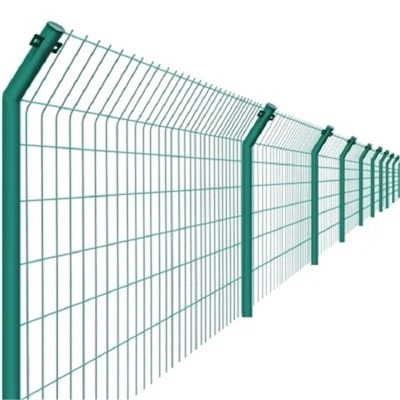

Wind resistance is a crucial factor to consider when installing a football court fence. As a professional Football Court Fence supplier, I've witnessed firsthand the impact of wind on these structures. In this blog, I'll delve into what wind resistance means for a football court fence, the factors that influence it, and how our products are designed to withstand the forces of nature.
Understanding Wind Resistance
Wind resistance, also known as aerodynamic drag, refers to the force exerted by the wind on an object as it moves through the air. For a football court fence, this force can cause stress and strain on the structure, potentially leading to damage or even collapse if the fence is not properly designed and installed.
The wind resistance of a fence is determined by several factors, including its shape, size, material, and the way it is installed. A fence with a large surface area will experience more wind force than a smaller one, and a fence made of a heavy material will be more resistant to wind than a lighter one. Additionally, the way the fence is installed, such as the depth of the posts and the use of bracing, can also affect its wind resistance.
Factors Affecting Wind Resistance
Shape and Size
The shape and size of a football court fence play a significant role in its wind resistance. A fence with a more streamlined shape will experience less wind force than a fence with a more irregular shape. For example, a fence with a smooth, curved surface will be more aerodynamic than a fence with a flat, rectangular surface.
The size of the fence also affects its wind resistance. A larger fence will experience more wind force than a smaller one, as it has a greater surface area for the wind to act on. However, a larger fence can also be more stable if it is properly designed and installed.
Material
The material used to construct a football court fence also affects its wind resistance. Different materials have different properties, such as strength, weight, and flexibility, which can impact how well the fence can withstand wind forces.
For example, metal fences, such as 3D Welded Wire Mesh Fence and Zinc Steel Fence, are generally more resistant to wind than wooden fences. Metal fences are stronger and more durable, and they can be designed to have a more streamlined shape, which reduces wind resistance.
On the other hand, wooden fences are lighter and more flexible than metal fences, which can make them more susceptible to wind damage. However, wooden fences can also be treated to improve their strength and durability, and they can be designed to have a more natural look and feel.
Installation
The way a football court fence is installed is also crucial to its wind resistance. A fence that is properly installed will be more stable and less likely to be damaged by wind.
When installing a fence, it is important to ensure that the posts are set deep enough into the ground and that they are properly braced. The fence panels should also be securely attached to the posts to prevent them from moving or swaying in the wind.
In addition, it is important to consider the local wind conditions when installing a fence. In areas with high winds, it may be necessary to use additional bracing or to install the fence at a lower height to reduce wind resistance.
Our Football Court Fence Products
As a Football Court Fence supplier, we offer a range of products that are designed to withstand the forces of nature. Our Football Court Fence is made from high-quality materials and is designed to be both strong and durable.
Our 3D Welded Wire Mesh Fence is a popular choice for football courts. It is made from high-tensile steel wire that is welded together to form a strong and stable structure. The 3D design of the fence provides additional strength and stability, making it more resistant to wind and other forces.
Our Zinc Steel Fence is another popular option. It is made from galvanized steel that is coated with a layer of zinc to protect it from rust and corrosion. The zinc coating also provides additional strength and durability, making the fence more resistant to wind and other forces.


In addition to our standard products, we also offer custom-designed fences that can be tailored to meet the specific needs of our customers. Our team of experts can work with you to design a fence that is both functional and aesthetically pleasing, and that is specifically designed to withstand the wind conditions in your area.
Importance of Wind Resistance in Football Court Fences
Wind resistance is not only important for the safety and durability of a football court fence, but it is also important for the overall performance of the fence. A fence that is not properly designed and installed to withstand wind forces can cause a number of problems, including:
- Damage to the fence: High winds can cause the fence to sway, bend, or even collapse, which can result in damage to the fence and potentially pose a safety hazard.
- Disruption to the game: A fence that is damaged or unstable can disrupt the game and make it difficult for players to focus.
- Increased maintenance costs: A fence that is not properly designed and installed to withstand wind forces may require more frequent maintenance and repairs, which can increase the overall cost of the fence.
Conclusion
Wind resistance is a crucial factor to consider when installing a football court fence. By understanding the factors that affect wind resistance and choosing a fence that is designed to withstand the forces of nature, you can ensure that your fence is safe, durable, and functional.
As a Football Court Fence supplier, we are committed to providing our customers with high-quality products that are designed to meet their specific needs. If you are interested in learning more about our products or if you have any questions about wind resistance or other aspects of football court fences, please contact us. We would be happy to discuss your options and help you choose the right fence for your project.
References
- "Wind Load Calculations for Fences." Engineering ToolBox.
- "Fence Design and Installation: A Guide to Wind Resistance." National Association of Home Builders.
- "Wind Resistance of Fences: A Review of the Literature." Journal of Structural Engineering.