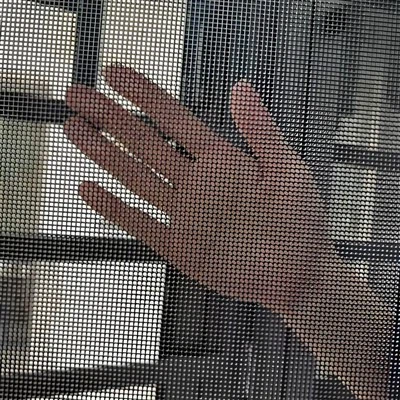

Robotic Safety Guard Panels are welded steel mesh panels for enclosing industrial robot cells, automated production areas, welding cells, palletizing zones and material handling areas. A welded mesh surface is combined with a steel frame to form a defined guarding perimeter while keeping the equipment visible. Mesh opening, wire diameter, panel dimensions, frame profile and surface finish are selected according to the cell layout and installation requirements.
Product Structure
Welded Mesh Panel
Steel wires are resistance welded at each intersection to form a uniform mesh grid. The specified opening and wire diameter determine the mesh configuration for the guarding panel.
Reinforced Frame
A steel perimeter frame supports the mesh and provides a consistent edge for connection. Frame size is matched to the panel dimensions and installation arrangement.
Connection Points
Panel edges can be prepared for bolted connections to posts, brackets and adjacent panels. Connection positions follow the installation drawing where project-specific dimensions are required.
Typical Specifications
|
Parameter |
Typical Specification |
|
Mesh Opening |
20 × 20, 25 × 25, 30 × 30, 40 × 40, 50 × 50 mm |
|
Wire Diameter |
3.0–6.0 mm |
|
Panel Width |
500–2500 mm |
|
Panel Height |
1000–2500 mm |
|
Frame Profile |
20 × 20–40 × 40 mm |
|
Material |
Low-carbon steel |
|
Surface Finish |
Powder coated or galvanized |
|
Panel Type |
Flat welded mesh panel |
|
Connection |
Bolted or project-specific |
|
Customization |
Panel, mesh, frame and connection dimensions |
Selecting the Mesh Opening
20–25 mm Openings
Smaller openings create a denser mesh pattern for guarding layouts where closer mesh spacing is required around moving equipment.
30–40 mm Openings
These openings provide a practical balance between mesh density and visibility for many general robot cell arrangements.
50 mm Opening
A 50 mm opening provides a more open mesh pattern where visual access to the enclosed equipment is a priority within the specified guarding arrangement.
The final opening should be selected according to the equipment layout, separation requirements and applicable machine safety criteria.
Panel Dimensions
Height
Panel heights from 1000 to 2500 mm cover common enclosure layouts. Height should be coordinated with the equipment arrangement and the required guarding boundary.
Width
Panel width is normally coordinated with post spacing and the cell perimeter. Consistent widths can simplify panel positioning and future replacement.
Custom Cutting
Non-standard widths and heights are available for corners, narrow sections, irregular boundaries and areas around fixed equipment. Drawing-based dimensions provide the reference for fabrication.
Material and Surface Finish
Low-Carbon Steel
Low-carbon steel provides the base material for the welded mesh and frame. Wire diameter and frame profile are selected according to the specified panel configuration.
Powder Coating
Powder coating provides a uniform finished surface for indoor manufacturing environments. Color can be specified according to the project requirement.
Galvanized Finish
Galvanized steel provides a zinc protective layer for applications requiring additional resistance to environmental exposure. Finish selection should match the installation conditions.
Applications
Robotic Work Cells
Panels form the perimeter around robot operating areas and separate the working zone from adjacent production space while retaining visibility.
Automated Production Lines
Guarding panels can be positioned along automated processing stations, conveyors and transfer areas to define the equipment perimeter.
Welding and Handling Cells
Mesh panels provide a visible barrier around welding, handling and automated process areas. Panel dimensions follow the available floor layout.
Palletizing Areas
Panels can surround palletizing and material handling zones, with access sections positioned according to the operating layout.
Access and Layout Planning
Personnel Access
Door positions should be defined during cell layout planning. Panel width, post locations and adjacent sections can then be coordinated with the required opening.
Maintenance Access
Removable or accessible sections can be incorporated where inspection, servicing or component replacement requires entry into the guarded area.
Corner Connections
Corner locations should be checked against the actual cell perimeter. Panel and post positions should allow clear space around machinery, conveyors and service areas.
Manufacturing Control
Mesh Accuracy
Mesh opening, wire diameter and panel dimensions are checked against the specified configuration before assembly.
Frame Alignment
Frame dimensions, welded joints and panel geometry are checked to maintain consistent connection positions across the finished panels.
Surface Inspection
Finished panels are inspected for coating coverage, visible surface condition and dimensional consistency before packing.
Why Specify Custom Panels?
Project-Matched Dimensions
Panel width and height can follow the actual guarding perimeter, including narrow sections and irregular cell boundaries.
Coordinated Components
Mesh panels, frames, posts and connection positions can be specified as one coordinated arrangement to match the installation layout.
Drawing-Based Production
Project drawings provide the reference for panel dimensions, mesh opening, frame details and connection locations before fabrication.
Applications by Industry
Robotic Safety Guard Panels are used around automated manufacturing areas in automotive production, metalworking, welding, packaging, logistics, material handling, assembly and general factory automation. Panel dimensions, mesh configuration and access arrangements can be adapted to different production layouts.
FAQ
Q: What mesh openings are available?
A: Common options include 20 × 20 mm, 25 × 25 mm, 30 × 30 mm, 40 × 40 mm and 50 × 50 mm. Other mesh dimensions can be reviewed according to the project requirement.
Q: Can panel dimensions be customized?
A: Yes. Panel width, height, mesh opening, wire diameter, frame profile and connection positions can be specified from drawings or dimensional requirements.
Q: Which surface finishes are available?
A: Powder coating and galvanized finishes are available. Finish selection depends on the installation environment and project specification.
Q: Can the panels be integrated with access doors?
A: Yes. Door sections, removable panels and other access arrangements can be incorporated into the guarding layout. Opening dimensions and positions should be confirmed with the cell drawing.
Q: What information is needed for a quotation?
A: Provide panel width and height, mesh opening, wire diameter, frame profile, surface finish, quantity and available drawings. Door locations, post spacing and special connection requirements should also be included when applicable.
Hot Tags: robotic safety guard panels, China robotic safety guard panels manufacturers, suppliers, factory, 3 16 welded wire mesh, 6mm steel reinforcing mesh, Floor Heating Mesh, Floor heating welded wire mesh, light duty wire mesh panel, pvc coated wire panels