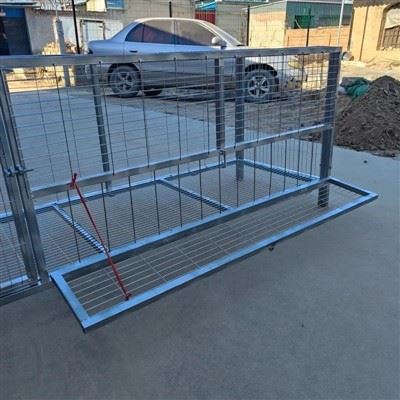

Step-Down Wire Decking is a welded steel mesh panel installed across pallet rack beams to form a load-supporting storage surface. Its formed support channels sit below the mesh and engage with stepped beam profiles.Selection is based on panel width and depth, beam profile, wire diameter, mesh opening, support-channel layout, load requirement and surface finish. These dimensions should be confirmed against the rack configuration before production.
Product Structure
Welded Wire Mesh
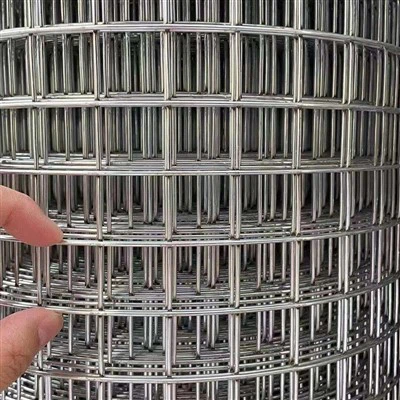
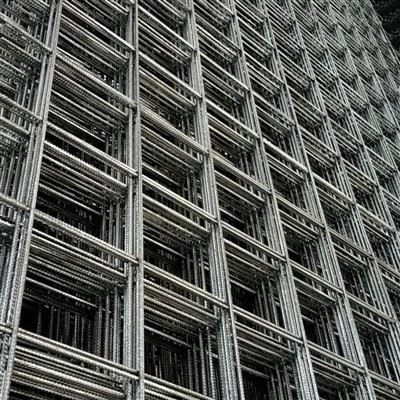
Steel wires are welded at each intersection to form the deck surface. Wire diameter and mesh opening are selected according to panel size and loading requirements.
Step-Down Channels
Formed steel channels provide the bearing points between the mesh panel and rack beams. Channel dimensions and positions are matched to the beam profile.
Panel Edges
The outer wires are formed to the specified panel dimensions. Edge geometry is controlled together with the mesh and support channels.
Step-Down Configuration
Lower Support
The support channels are positioned below the mesh surface. This configuration allows the deck to engage with stepped beam sections while keeping the storage surface within the rack layout.
Channel Position
Channel location is determined by beam spacing and panel dimensions. Incorrect positioning can affect seating, so beam measurements should be confirmed before production.
Load Transfer
The welded mesh transfers load to the formed support channels, which bear on the rack beams. Channel quantity and spacing are selected according to the panel configuration.
Material and Manufacturing
Steel Wire
Carbon steel wire is used for the welded mesh. Wire diameter is selected according to panel dimensions, mesh opening and required loading conditions.
Resistance Welding
Wire intersections are welded into a fixed grid before forming. Weld spacing and mesh geometry are controlled across the panel.
Channel Forming
Support channels are formed to the specified width, height and position. Forming accuracy is checked because channel geometry affects beam engagement.
Key Product Features
Step-Down Support
The support channels are located below the mesh and arranged for stepped rack beam profiles.
Open Storage Surface
The welded mesh provides a continuous steel storage surface while maintaining open mesh areas.
Specified Configuration
Panel dimensions, wire diameter, mesh opening, channel quantity and channel position can be matched to the rack layout and required loading condition.
Technical Specifications
|
Parameter |
Typical Specification |
|
Panel Width |
24–48 in |
|
Panel Depth |
36–60 in |
|
Wire Diameter |
3.0–6.0 mm |
|
Mesh Opening |
1.5 × 3 in to 2 × 4 in |
|
Support Channels |
2–4 per panel |
|
Material |
Carbon Steel |
|
Surface Finish |
Powder Coated or Galvanized |
|
Load Capacity |
Project-specific |
|
Panel Type |
Step-Down Wire Decking |
|
Custom Dimensions |
Available |
Size Selection
Panel Width
Width is selected from the clear distance between rack frames and the beam arrangement. The finished panel should provide continuous bearing across the specified support points.
Panel Depth
Depth is matched to the front-to-back rack dimension. Channel positions are coordinated with the beam locations.
Beam Profile
Beam height, step position, bearing width and overall section should be confirmed before production. Existing panel measurements or rack drawings can support dimensional verification.
Load Selection
Distributed Load
The panel configuration is selected according to the expected load spread across the deck surface.
Contact Area
Pallet feet, containers and other concentrated contact areas affect the required wire diameter, mesh opening and support arrangement.
Working Load
The decking load rating should be considered together with beam span and rack structure. Final working load should be established from the complete rack configuration.
Application Areas
Pallet Rack
Used on rack levels supporting pallets and unitized materials where a wire deck surface is required.
Warehouse Storage
Suitable for distribution facilities, industrial warehouses and general material storage areas.
Replacement Panels
The step-down arrangement can be specified when replacing existing decking while retaining the current rack beam configuration.
Surface Finish
Powder Coating
Powder-coated steel provides a finished surface for indoor storage environments. Standard or specified colors can be used according to project requirements.
Galvanizing
Galvanized steel provides a zinc-coated surface for applications requiring additional corrosion protection.
Finish Selection
The finish is selected according to indoor exposure, storage conditions and handling requirements.
Quality Control
Dimensional Inspection
Panel width, depth, mesh opening, wire diameter and support-channel positions are checked against the production specification.
Weld Inspection
Welded intersections are checked for consistent joining and mesh formation across the panel.
Forming Inspection
Channel dimensions, channel alignment and overall panel geometry are checked after forming.
Surface Inspection
Coating coverage and visible surface condition are checked before packing.
Ordering Information
Provide the rack beam profile, panel width, panel depth, mesh opening, wire diameter, support-channel quantity, surface finish and required working load.
For replacement projects, provide existing panel dimensions or rack drawings. Beam section and bearing dimensions should be confirmed before final production.
FAQ
Q: What is Step-Down Wire Decking used for?
A: It provides a welded wire storage surface between pallet rack beams where support channels are positioned below the mesh to engage with stepped beam sections.
Q: How is the correct panel size selected?
A: Panel width and depth are matched to the rack opening and beam arrangement. Channel positions are then matched to the beam profile.
Q: Can the wire diameter and mesh opening be specified?
A: Yes. Wire diameter, mesh opening, panel dimensions and support-channel layout can be specified according to the rack configuration and loading requirement.
Q: How is the load capacity determined?
A: Load capacity depends on panel dimensions, wire diameter, mesh opening, channel spacing, beam span and load distribution. The complete rack configuration should be reviewed before the working load is established.
Q: Can Step-Down Wire Decking be produced from drawings?
A: Yes. Drawings or existing panel measurements can be used to confirm panel dimensions, mesh configuration, channel locations and surface finish before production.
Hot Tags: step-down wire decking, China step-down wire decking manufacturers, suppliers, factory, 12 gauge stainless steel wire mesh, equipment protection mesh panel, flat wire mesh panel, heavy duty woven steel mesh, mesh partition panel, steel mesh reinforcement panel