
Prison security is of utmost importance, and the choice of materials for prison security fences plays a crucial role in ensuring the safety and integrity of correctional facilities. As a prison security fence supplier, I have extensive knowledge and experience in providing high - quality fencing solutions for prisons. In this blog, I will discuss the commonly used materials for prison security fences.
1. Steel
Steel is one of the most popular materials for prison security fences. It offers several advantages that make it well - suited for this application.
High Strength
Steel is extremely strong and can withstand significant force. It can resist attempts at cutting, climbing, and ramming. For example, heavy - gauge steel bars can be used to construct vertical bars in a prison fence. These bars are difficult to break or bend, providing a reliable barrier against escape.
Durability
Steel is highly durable and can last for a long time, even in harsh environmental conditions. It is resistant to corrosion when properly treated. Galvanized steel, which has a zinc coating, is often used to prevent rusting. This means that prison fences made of steel require less maintenance over their lifespan, reducing long - term costs.
Customizability
Steel fences can be customized to meet the specific security requirements of a prison. They can be designed with different heights, bar spacing, and configurations. For instance, a prison may require a fence with closely spaced bars to prevent inmates from squeezing through, or it may need a fence with a specific height to deter climbing.
2. Chain Link Mesh
Chain link mesh is another commonly used material for prison security fences.
Visibility
One of the key advantages of chain link mesh is its high visibility. Guards can easily see through the fence, allowing them to monitor the activities inside and outside the prison. This is important for maintaining security and preventing unauthorized access.
Cost - effectiveness
Chain link mesh is relatively inexpensive compared to some other materials. It is a cost - effective option for prisons, especially those with large perimeters. The installation of chain link mesh fences is also relatively quick and straightforward, which can further reduce costs.
Flexibility
Chain link mesh can be easily installed on uneven terrain. It can be stretched and shaped to fit the contours of the land, making it suitable for a variety of prison locations. You can learn more about Chain Mesh Fence on our website.
3. Wrought Iron
Wrought iron has been used for fencing for centuries and is still a popular choice for prison security.
Aesthetic Appeal
Wrought iron fences have a classic and elegant appearance. While security is the primary concern in a prison, the aesthetic aspect can also be important, especially in facilities that are located in areas where the public can see them.
Strength and Security
Wrought iron is strong and can be designed to provide a high level of security. It can be forged into various shapes and patterns, including sharp spikes at the top to deter climbing. Wrought Iron Wall Fence is a great option for prisons that want a combination of security and style.
Longevity
Like steel, wrought iron is a durable material. With proper maintenance, a wrought iron fence can last for decades. It can withstand the test of time and weather conditions.
4. Highway Wire Mesh Fence
Highway wire mesh fences are also used in prison security applications.
Versatility
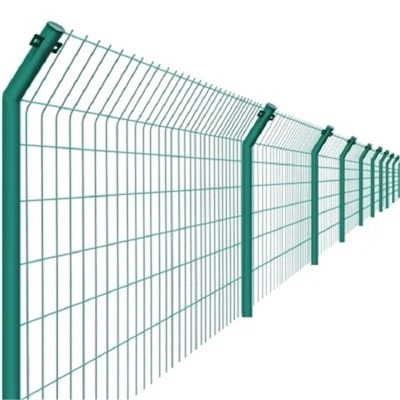
Highway wire mesh fences are versatile and can be used in different parts of a prison. They can be used as perimeter fences or as partitions within the prison compound. The mesh design provides a good balance between security and visibility.
Impact Resistance
These fences are designed to withstand impacts, which is important in a prison environment where there may be attempts to damage the fence. They are often made of high - strength wire that can resist cutting and other forms of vandalism. You can find more information about Highway Wire Mesh Fence on our website.
5. Concrete
Concrete is a heavy - duty material that can be used for prison security fences.
Solid Barrier
Concrete fences provide a solid and impenetrable barrier. They are difficult to break through or climb over. Concrete can be poured into molds to create a variety of fence designs, including walls with smooth surfaces to prevent climbing.
Fire Resistance
Concrete is fire - resistant, which is an important safety feature in a prison. In the event of a fire, a concrete fence can help contain the fire and prevent it from spreading.
Low Maintenance
Concrete fences require relatively low maintenance. They do not rust or rot, and they can withstand the elements well.
Factors to Consider When Choosing Materials
When choosing materials for prison security fences, several factors need to be considered.
Security Requirements
The level of security required is the most important factor. Prisons with high - risk inmates may require stronger and more secure materials, such as thick steel bars or concrete walls.
Budget
Budget is also a significant consideration. Different materials have different costs, and prisons need to balance security with cost - effectiveness.
Environmental Conditions
The local environmental conditions, such as weather, soil type, and exposure to chemicals, can affect the choice of materials. For example, in areas with high humidity, corrosion - resistant materials like galvanized steel or stainless steel may be more suitable.
Aesthetic Considerations
Although security is the primary concern, the appearance of the fence may also be important, especially in prisons that are located in public areas.
Conclusion
In conclusion, there are several materials commonly used for prison security fences, each with its own advantages and disadvantages. Steel, chain link mesh, wrought iron, highway wire mesh fence, and concrete are all viable options. As a prison security fence supplier, I can provide a range of fencing solutions tailored to the specific needs of your prison. Whether you need a high - security fence for a maximum - security prison or a more cost - effective option for a medium - security facility, we can help.


If you are interested in purchasing prison security fences, I encourage you to contact us for a detailed discussion. We can provide you with more information about our products, including specifications, pricing, and installation options. Let's work together to ensure the safety and security of your correctional facility.
References
- American Correctional Association. (20XX). Standards for Adult Correctional Institutions.
- National Institute of Corrections. (20XX). Security and Safety in Prisons.